
Holographic vs Iridescent: How to Tell Them Apart
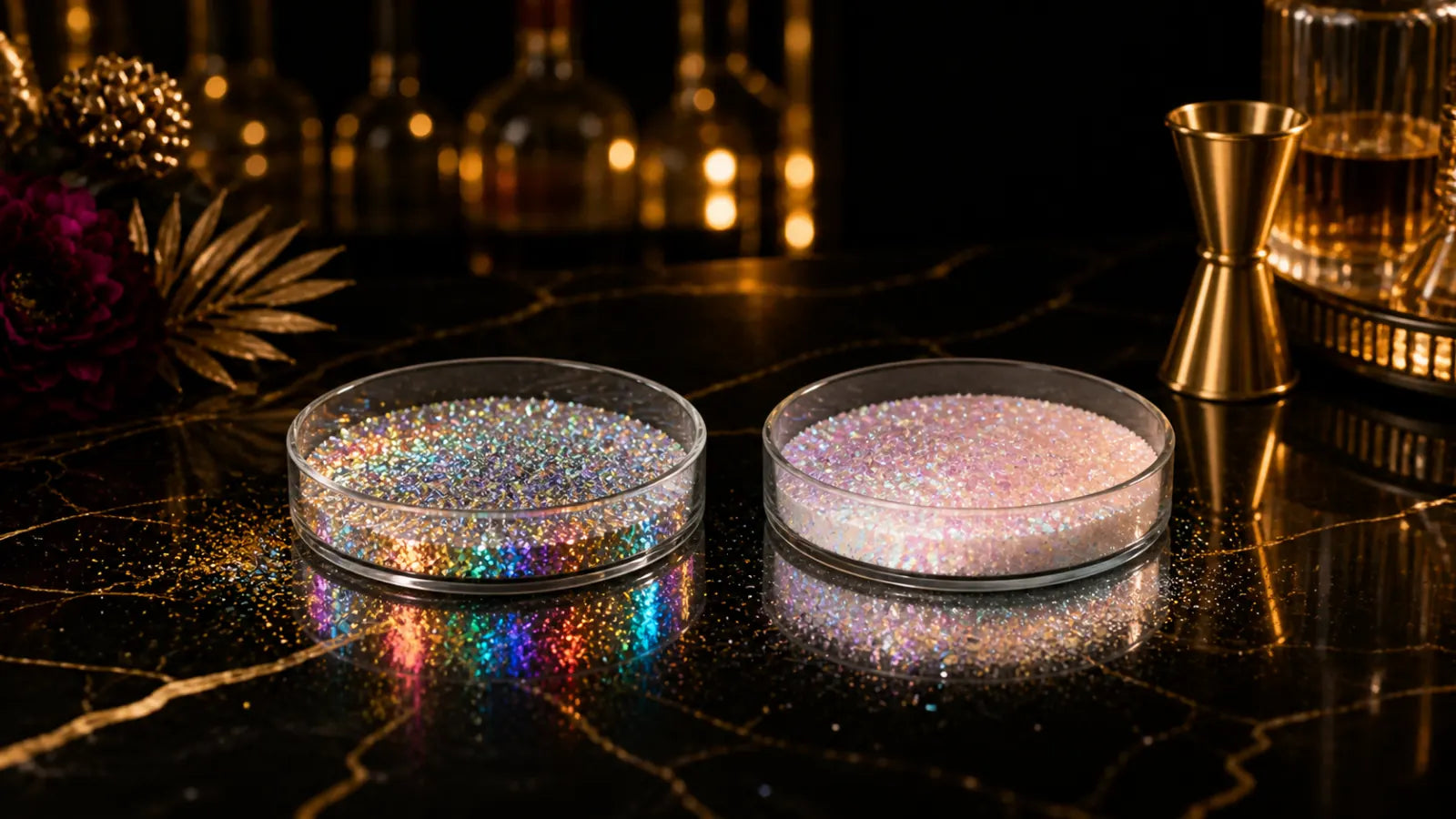
Holographic vs iridescent glitter is an easy call once you know what to watch for. Holographic throws a clear rainbow flash. Iridescent shifts more softly, with the pearly, opal-like glow you see on a soap bubble.
Both catch the light beautifully. They just bring a different kind of drama to the bar.
The fastest way to tell them apart
Hold the glitter where the light can move across it. If you see a sharp spectrum, red through violet, you are looking at holographic glitter. It reads bright, reflective, and a little louder from across the room.
If the color seems to turn gently from one tone to another, without that full rainbow stripe, it is iridescent. The shift is softer and more pearly. Think opal, not disco ball.
The short version: holographic flashes the rainbow. Iridescent gives you the glow.
Holographic glitter: the rainbow pour
Holographic glitter is for the projects that want to be seen when the light hits. It reflects a full rainbow flash, from bright linear holo to deeper colored and intense 5D mixes.
The base color still matters. A silver holographic can feel all light and sparkle, while a colored holographic keeps its own shade and adds rainbow movement on top. Same finish, different mood.
Holo is a good pick when you want a design to read with a little more contrast. On a tumbler, in resin, or in a layered nail set, it brings a crisp flash that changes as you move the finished piece around.
Iridescent glitter: the pearly pour
Iridescent glitter shifts softly between tones as the light moves. It has a pearly, opal-like glow that can look delicate on its own or make the color underneath it feel more interesting.
That is the key difference. Holographic glitter says, “look at this rainbow.” Iridescent glitter is more of a slow reveal. It can look almost quiet in one direction, then show another tone when you tilt it toward the light.
It is especially lovely when you want shimmer without turning the whole project into a light show. Layer it over color, use it as the main finish, or let it give a pale mix that little bit of movement it was missing.
If the full rainbow flash is the part you came for, browse the holographic collection.
Where chameleon fits in
It helps to keep chameleon glitter in its own lane. Chameleon is color shift: one pour can look like two or three different glitter colors depending on the angle and lighting. Holographic is about a rainbow reflection. Iridescent is about a soft pearly shift.
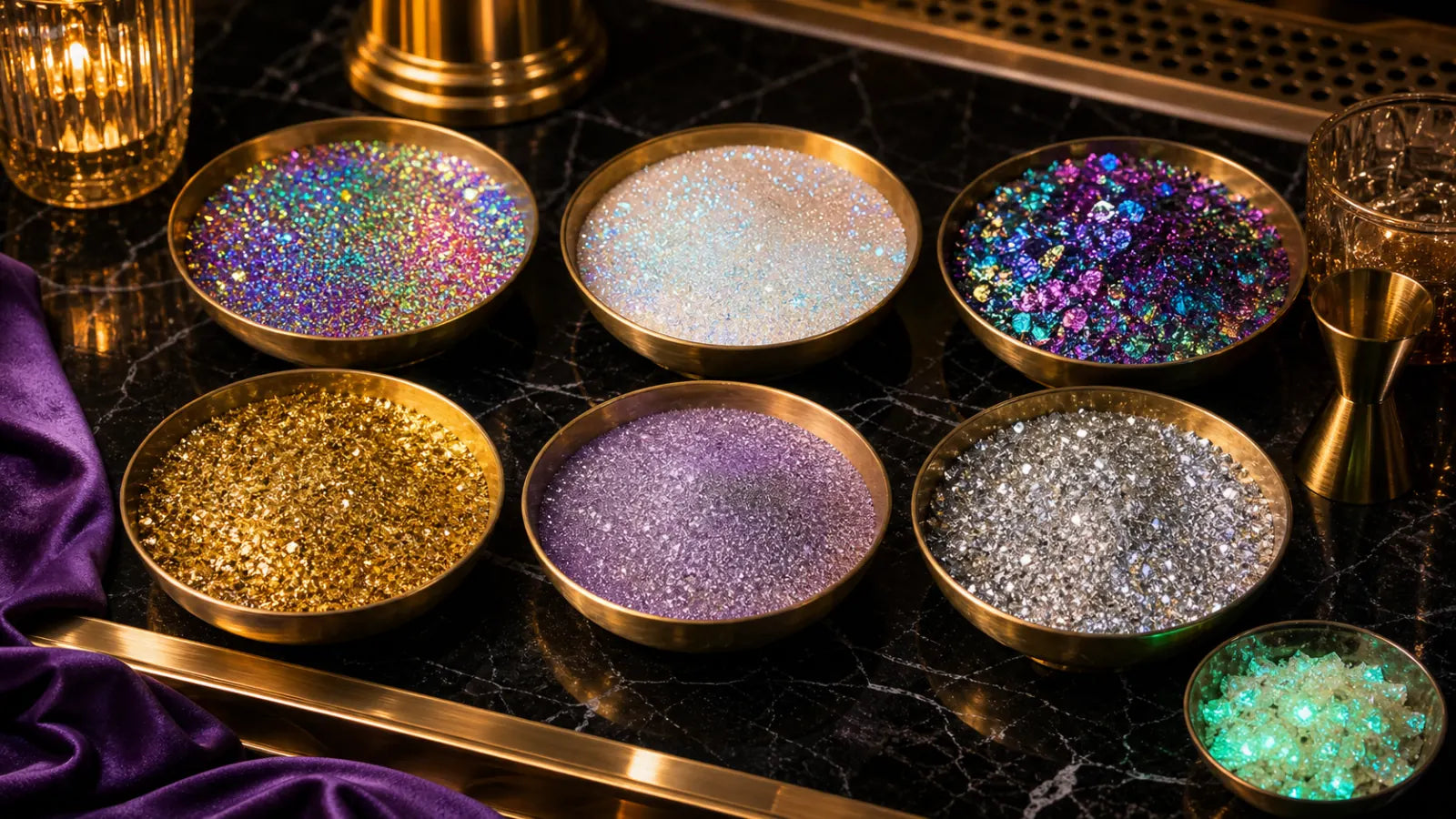
They can overlap in one glitter, which is why a product can feel extra lively in your hand. Hologram Highball, for example, is a chunky mix with holographic, chameleon, and textured finishes. Diamond Fizz is a fine iridescent pour. Same bar, completely different light show.
How the two finishes behave in a project
The easiest comparison is to give the two finishes the same job. Put a holographic and an iridescent glitter beside each other in the same color family, then move them through the same light. The holographic finish will send out distinct rainbow color. The iridescent finish will soften, shift, and catch nearby color in a more pearly way.
That matters when you are building layers. Holographic makes a strong statement even when the base color is simple. It is the finish you choose when the flash itself is part of the design. Iridescent can play a more supporting role. It can brighten a color, add depth over another layer, or give a finished surface a little movement without asking to be the loudest thing in the room.
Neither one is the “better” finish. They answer two different questions. Do you want the light to break into rainbow? Go holographic. Do you want the color to glow and turn softly when you move it? Go iridescent.
How to pick your finish
Start with the effect you want, not the name on the jar.
- Pick holographic when you want a visible rainbow flash and a brighter, more reflective read.
- Pick iridescent when you want a pearly shift that moves more quietly across the surface.
- Pick chameleon when the changing base color is the whole point.
Then choose the cut that suits the project. A fine glitter will cover smoothly, while a chunky mix brings more texture and depth. Finish and cut are separate choices, which means you can pull together the exact kind of sparkle you had in mind.
If you are still deciding, start with one word: flash or glow. That is usually enough to point you toward the right side of the shelf. You can always layer later, but choosing the finish first gives the project a clear direction before the glitter ever leaves the container.
For the rest of the finish menu, take a look at all glitter.
This blog pairs well with…
Hologram Highball
Bright, fizzy, and built to catch the light without taking itself too seriously.
- 2 oz gin
- 3/4 oz lemon juice
- 3/4 oz simple syrup
- Sparkling water
Shake the gin, lemon, and simple syrup with ice. Strain into a tall glass over fresh ice, then top with sparkling water and give it one gentle stir.
For a mocktail, use a botanical nonalcoholic spirit in place of gin.
→ Hologram Highball, a silver chunky mix with holographic, chameleon, and textured finishes.
Know When It Drops
Flights and event nights sell out fast. Leave your email and we'll let you know when something's coming.

Leave a comment
This site is protected by hCaptcha and the hCaptcha Privacy Policy and Terms of Service apply.