
What Is Mica Powder?
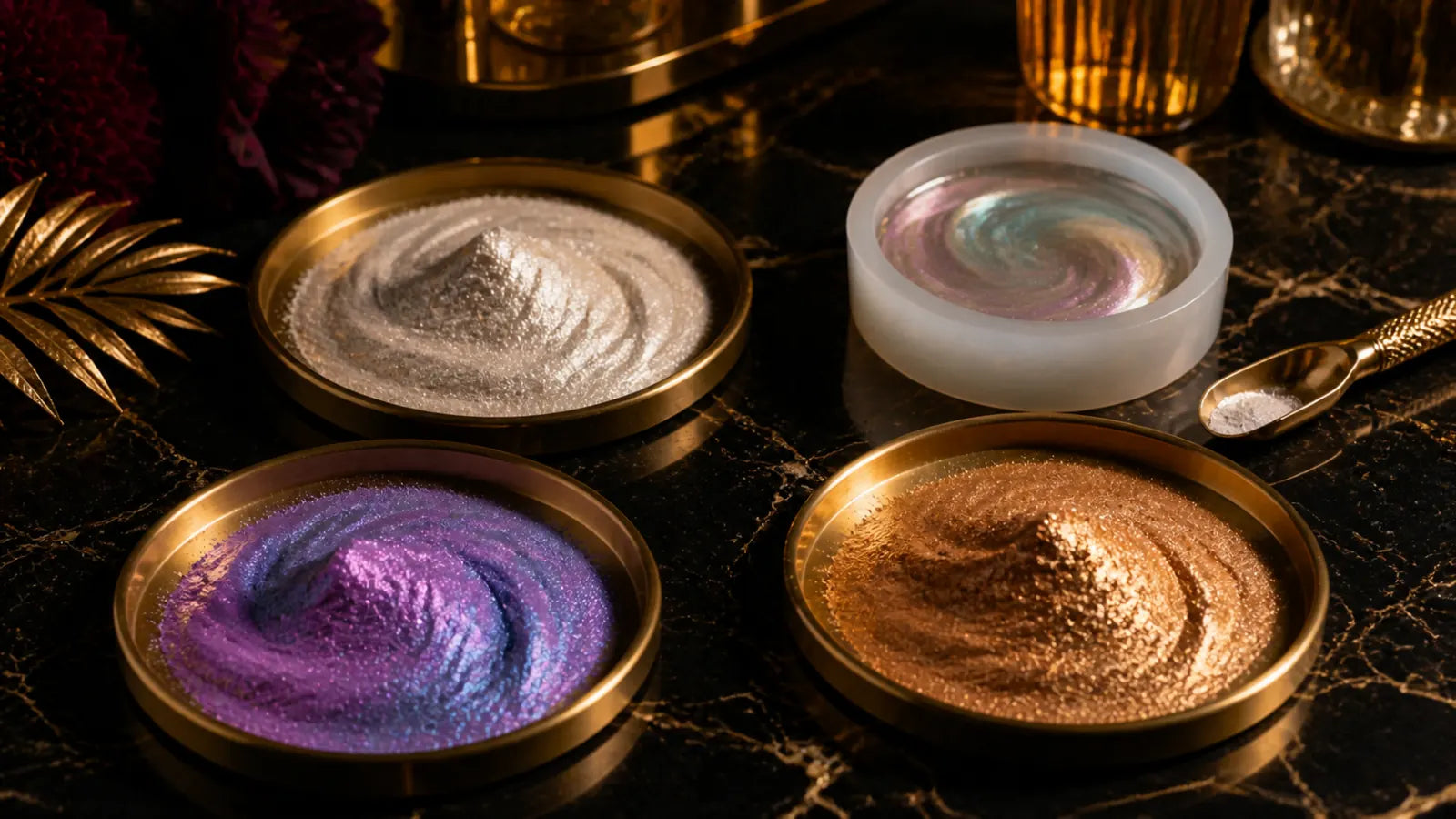
Mica powder is the quiet glow behind a project that looks like it has its own lighting. It is a powdery colorant built around mica, a naturally layered mineral known for its reflective, pearly surfaces. In craft work, mica powders and pigments are used to bring color, pearl, and shifting light to resin, tumblers, and all the little details that deserve more than a flat finish.
If glitter is the confetti cannon, mica is the low light at the bar. Pull up a seat and let’s sort it out.
What mica powder actually does
Mica’s layered structure is the reason it catches light in such a soft, dimensional way. Depending on the powder and the surface beneath it, it can read as pearl, metallic sheen, a wash of color, or a color shift that changes when you move the piece around.
That makes mica especially satisfying in clear mediums. A small amount can tint clear resin with a translucent glow. Use more and the color becomes richer and more opaque-looking. The effect is buildable, which gives you room to make a project whisper or make it take the microphone.
The Lab’s Pigments & Mica Powders collection includes both mica powders and specialty pigments. You will see regular pearl-like color alongside chameleon and hypershift powders that bring a bigger angle-dependent color change. Same back bar, different light show.
Mica powder vs glitter
Mica powder and glitter both catch the eye, but they arrive at the party differently. Glitter is made of distinct reflective pieces, so it reads as sparkle, texture, and individual flashes. Mica is a fine powder, so it colors a surface with a smoother glow.
Think about the finish you want to see from across the room. If you want separate pieces of light to show up in a tumbler, resin pour, or nail set, glitter is your move. If you want color that seems to live inside the surface, mica is the move.
They can absolutely work together. Mica can establish the color and pearl underneath, while glitter gives the top layer its bright little points of interest. There is no need to choose a side of the bar when the project wants both.
Mica powder for resin
Resin is one of mica powder’s favorite places to hang out because clear resin gives the color room to glow. Start with a small amount, mix it into your resin thoroughly, and look at it before you pour. You can always add more color. It is much harder to talk a bold pour back into being subtle.
For a translucent, stained-glass kind of effect, begin with the lightest touch and build slowly. For saturated color, keep adding in small increments until the mix looks right for your project. A test pour is always worth the few extra minutes, especially when you are planning layers or working with a color shift.
Mica is lovely for resin coasters, keychains, jewelry details, molds, and accent layers. A pearl powder can make a clear layer look lit from within; a hypershift pigment can turn a simple tilt into the whole reveal. When the piece needs that polished, color-moving finish, browse pigments and mica powders.
If you are sealing a finished resin project, make room for the last step, too. UV Resin is the Lab’s tumbler-friendly finish option. Follow its product instructions, wear gloves and proper PPE, and work in a well-ventilated area.
Mica powder on tumblers and other craft surfaces
Mica is not just a resin-only ingredient. It can bring a soft pearl wash or a dramatic color shift to tumbler projects, too. The key is pairing the powder with the application method your project calls for, then building the color in light, even passes instead of trying to make every bit of drama happen at once.
On a tumbler, mica is a nice choice when you want shimmer that reads as color first and sparkle second. A layered project can use mica for depth, then bring in glitter where you want more flash. A chameleon pigment can be especially fun on a curved surface because the color changes as the cup moves through the light.
For a tumbler build, start with the cup that suits the project. Tumbler Blanks has snow globe-style options along with standard cups, and each product page carries the details for that specific blank. Treat the product instructions as your house rules before you start mixing, pouring, or sealing.
How to choose a mica color or pigment
Start with the mood, not the longest name on the jar.
- Pearl or soft shimmer: Choose a mica powder when you want the color to glow gently through the finished surface.
- Solid, buildable color: Add mica a little at a time until the depth feels right for the project.
- A changing reveal: Choose a chameleon or hypershift pigment when you want a project to look different from one angle to the next.
- More texture and sparkle: Pair your mica with glitter rather than asking one powder to do every job.
This is also the part where a tiny test saves a big project. Put a small amount of your chosen powder into a sample of the medium you are using, then check it in the light where the finished piece will live. The same mica can feel soft in one setting and full disco in another.
And if the project is calling for a whole spread of color, shop all Lab supplies and set yourself up with a few options. One dependable pearl, one color shift, and one glitter you love can carry you a surprisingly long way.
The short version
Mica powder is a fine colorant that brings pearl, shimmer, and buildable color to a craft project. It is different from glitter because it creates a smooth glow instead of individual sparkling pieces. Use it on its own when you want depth and sheen, or pair it with glitter when your project deserves both the slow burn and the confetti.
This blog pairs well with…
Aurora
This is the Lab’s house pour for Aurora: bright, floral, and a little color-changing in the glass. The glitter is the drink’s namesake, not an ingredient.
- 1 1/2 oz gin
- 1 oz chilled butterfly pea flower tea
- 3/4 oz fresh lemon juice
- 1/2 oz simple syrup
- Sparkling water
Shake the gin, tea, lemon, and simple syrup with ice. Strain into a tall glass over fresh ice, top with sparkling water, and give it one gentle stir. The lemon will shift the tea from blue toward violet right in the glass.
For a mocktail, use a botanical nonalcoholic spirit in place of gin.
→ Aurora, a hypershift chameleon pigment sold in 2 gram increments.
Know When It Drops
Flights and event nights sell out fast. Leave your email and we'll let you know when something's coming.

Leave a comment
This site is protected by hCaptcha and the hCaptcha Privacy Policy and Terms of Service apply.